

Heatwave Deaths in Jamalpur: Four Lives Lost in Four Days Raise Concerns over Rural Workers’ Safety in Bangladesh

A Severe Heat Wave is Poised to be Fatal
The deaths in Jamalpur, Bangladesh, from 1 to 4 June 2026 have raised concerns about the dangers endured by farmers during hot weather. The people were harvesting paddy or drying straw in their fields in Madarganj, Bakshiganj and Dewanganj upazilas when they perished, the local news report said. There were instances of suspected heat-related illness, including heat stroke, among college students and health officials, but as per the available reports, the fatalities were not medically confirmed (Star News, 2026; TIMES Report, 2026).
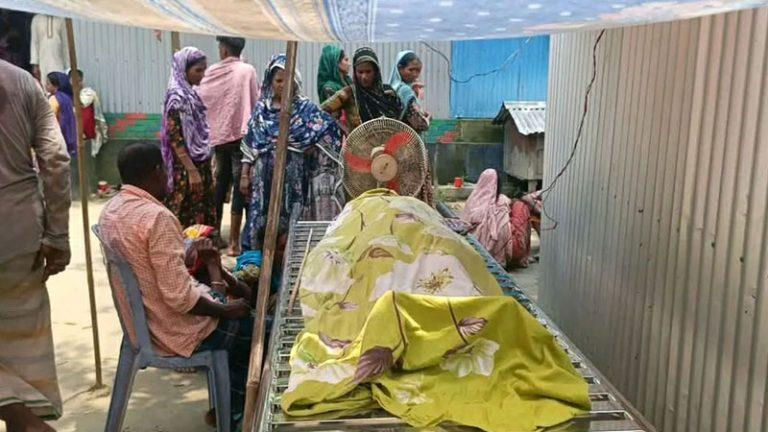
The second victim, farmer Tunu Akand, fell ill while drying straw in a field near his house in Madarganj. He was initially admitted to Jamalpur General Hospital and then transferred to Mymensingh for further treatment, but unfortunately, he died during the transfer.

There were also two other people who died: one, Bali Begum, who was drying paddy straw, and two men who became ill during the paddy harvest (Dhaka Tribune, 2026; TIMES Report, 2026). These events reveal a disturbing reality: In many rural communities, high temperatures can become life-threatening during key field activities.
Agricultural Workers Face Greater Risks:
Bangladesh is a rural country, and agriculture remains a primary livelihood for rural households. During harvest, farmers and agricultural laborers often must work in the field for extended periods to save their crops and livelihoods. Delays can lead to crop loss or monetary losses. This allows workers to keep working when temperatures and/or direct sun exposure are unsafe.

The prolonged heatwave has scorched ripe chillies, pulses, sunflowers, almonds and paddy crops, among others. This reporter visited Kafrul village, 194 kilometers north of Dhaka, Bangladesh's capital, and found farmer Abdul Barek Howlader (65) working diligently in his field. Abdul Barek’s livelihood relies solely on agriculture, so when crops are ruined, he faces financial loss and must resort to loans to make ends meet. Unfortunately, he faces these setbacks almost every season due to natural disasters. Last year, a severe heatwave prevented paddy from growing during the monsoon due to insufficient irrigation water.
The World Health Organization (WHO, 2026) has identified extreme heat as a major environmental and occupational health hazard. Prolonged exposure can result in dehydration, a medical emergency, heat exhaustion, and heatstroke. Heat can also worsen other health problems, such as increased strain on the heart and kidneys.
The risks are not uniformly distributed. Individuals with limited financial resources may have less access to shaded rest areas, safe drinking water, healthcare, and flexible work arrangements. The elderly and people with existing health problems are also at risk. The agricultural workforce and other manual laborers are particularly at risk from increased workplace heat stress (WHO & WMO, 2025). This is an environmental and economic challenge for families dependent on agricultural income. However, there must be a practical way to ensure safe working practices; workers can't be expected to do it alone.
Associating with Local Heat Risks to Climate Change
Existing media reports cannot prove that the deaths in Jamalpur were a direct result of climate change. As of yet, four deaths were reportedly linked to a heat wave, but it is unclear what caused them or if climate change played a role. Scientific studies show that the number, length, and severity of heatwaves have been rising across the globe due to climate change (WHO, 2026). Excessive heat threatens human health, reduces workers' productivity, and can affect livelihoods.
Adapting to higher heat exposure in Bangladesh is a major challenge, as many household activities happen outside the home. The effects are not only physical; people lose jobs, families may have to pay out-of-pocket health care costs, and communities may see increased strain on health care systems. I think the Jamalpur incident has become, and should be, a public-health emergency and a climate-justice issue. Weather events can severely affect people with little or no control over their work. Therefore, attention should focus on effective, climate-sensitive adaptation for people's livelihoods.
Building Climate Resilience in a hotter climate
The estimated death toll of Jamalpur during the heat wave episode also suggests the importance of improving heat preparedness and safeguarding vulnerable groups. While the cause of the deaths and the role of climate change in the deaths has not yet been confirmed, climactic heat related health risks have become an important issue for rural Bangladesh due to rising temperature. In addition to long-term policy measures, practical measures need to be put in place to make the country more climate-resilient.
One is the need for rural communities to be alerted to heatwaves in a timely way through local government, agricultural extension, mobile messaging, and local media. Second, there is a need to provide agricultural labourers with safer working conditions such as flexible working hours, rest breaks with shaded areas, safe drinking water, etc. Third, healthcare centres need to be ready to respond in the event of a heat-related emergency and also be able to detect emergency situations. Lastly, healthcare providers and agricultural institutions and associations should put in place coordination of climate adaptation measures between government institutions and local authorities, along with improvements in social protection for vulnerable households.
These actions must minimize the risk of heat-related illnesses, preserve livelihoods, and prevent unnecessary suffering. Climate resilience should go beyond merely adapting to the effects of shifting climate; it should keep people safe to work, access services and continue their livelihoods without taking undue risks. Lessons from this Jamalpur incident can strengthen local preparedness and foster climate-sensitive development. Protecting farmers and farm workers from extreme heat exposure is thus not only a public‐health issue, but also a climate‐justice issue. Effective, inclusive, and locally appropriate action is essential to a future that is safer, healthier, and more resilient.
References:
Dhaka Tribune. (2026, June 4). Farmer dies of 'heatstroke' in Jamalpur.
Star News. (2026, June 4). জামালপুরে তীব্র তাপদারে চােদদরে চাে জরেে মৃতযু [Four people die in four days amid severe heatwave in Jamalpur].
TIMES Report. (2026, June 4). Four deaths reported in Jamalpur amid severe heatwave.
TIMES Report. (2026, June 4). Four deaths reported in Jamalpur amid severe heatwave.
World Health Organization, & World Meteorological Organization. (2025, August 22). Climate change and workplace heat stress. https://wmo.int/resources/publication-series/climate-change-and-workplace-heat-stress/climate-change-and-workplace-heat-stress



Comments