

Climate Finance – The way forward for India and the Global South
At COP30 in Belém, Brazil, India has emerged as a leading voice for climate justice, championing equitable and accountable climate finance. Representing the Like-Minded Developing Countries (LMDCs)—a bloc that speaks for over half the world’s population—India has forcefully articulated the urgent need for predictable, transparent, and legally binding financial support from developed nations.
India’s climate finance journey has been built on a decade of persistent advocacy. While the Paris Agreement enshrined the principle of “common but differentiated responsibilities,” at COP30, India contends that developed countries have consistently failed to meet their obligations. The much-publicized $100 billion annual pledge remains unmet, and the new target of $300 billion by 2035, agreed upon at COP29 in Baku, has seen by India as “suboptimal” and lacking enforceability.
At the third high-level ministerial dialogue on climate finance, India underscored that without scaled-up, concessional, and grant-based finance, developing nations cannot meet their Nationally Determined Contributions (NDCs). These NDCs are central to global efforts to limit warming to 1.5°C, and India warned that the failure of developed nations to deliver finance risks derailing the entire climate ambition.
India has also emphasized that climate finance must be “new and additional,” not repackaged development aid or loans that increase debt burdens. It has called out “greenwashing” and the lack of clarity in current financial flows, demanding that Article 9.1 and 9.3 of the Paris Agreement—on legal obligations and leadership in mobilization—be upheld.
Despite these challenges, India has made significant progress: expanding renewable energy capacity, enhancing climate resilience, and investing in green infrastructure. Yet it maintains that domestic efforts cannot substitute for the developed world's global responsibility. India meeting one of its Paris commitments, well ahead of schedule, is testimony to that. More green power being added in 2025, than coal shows, the countries continued effort in this direction.
As new climate finance challenges occur, India’s stance is clear: climate finance is not charity—it is a matter of climate justice. The road from Baku to Belém and beyond must not be paved with diluted commitments but with concrete, enforceable actions that reflect the urgency of the climate crisis and the rights of the Global South.
India’s climate finance journey is not just about numbers—it is about fairness, trust, and the future of multilateralism.
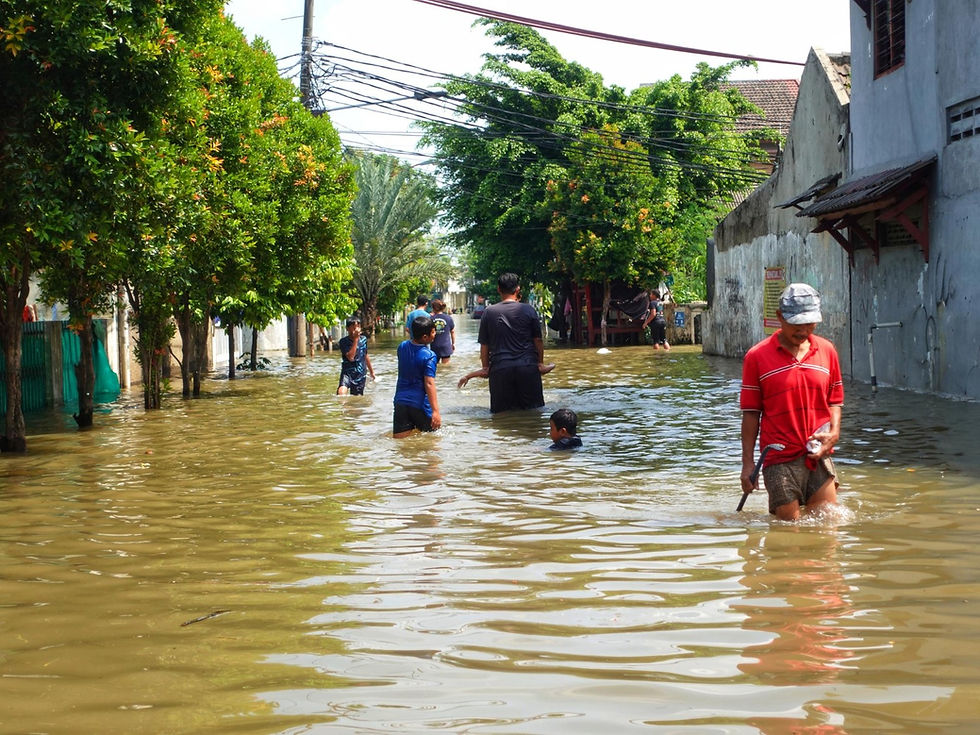
For me, climate finance is not about technical terms or big negotiations — it’s about real people and the communities that are affected first. Through my involvement with the Climate Reality community, I’ve seen how climate impacts can disrupt lives, especially for those who already have limited resources. When support and funding reach the right places, it truly strengthens local resilience. That’s why I feel India’s call for climate finance that is clear, fair, and reliable is not just a policy topic, but an essential step for protecting vulnerable people, given India and the neighbourhood is at the receiving end of climate catastrophes.
We are a large country with diverse development needs, and it continues to contribute to climate action in its own capacity. However, without the financial support initially committed to developing countries, meeting these responsibilities becomes more challenging. India’s position at COP30 and now at the ongoing World Economic Forum, Davos highlights that climate action and climate fairness are interconnected. When developed nations fulfil their commitments, it strengthens trust and supports more balanced global progress.


A biomechanical assessment is a systematic, clinical evaluation of the structure and function of the lower limb from the childrens podiatry lumbar spine and pelvis down through the hips, knees, lower legs, feet, and toes.
The scope of a fractional CFO's work goes far beyond what a bookkeeper or accountant typically handles. While bookkeepers and accountants focus primarily on recording, reporting, and compliance, a fractional CFO focuses on interpreting the numbers and using them to drive forward-looking strategy.