

WHEN DISASTERS ARE NO LONGER NATURAL: INDIA’S CLIMATE REALITY FROM THE FRONTLINES OF COMMUNITY RESPONSE

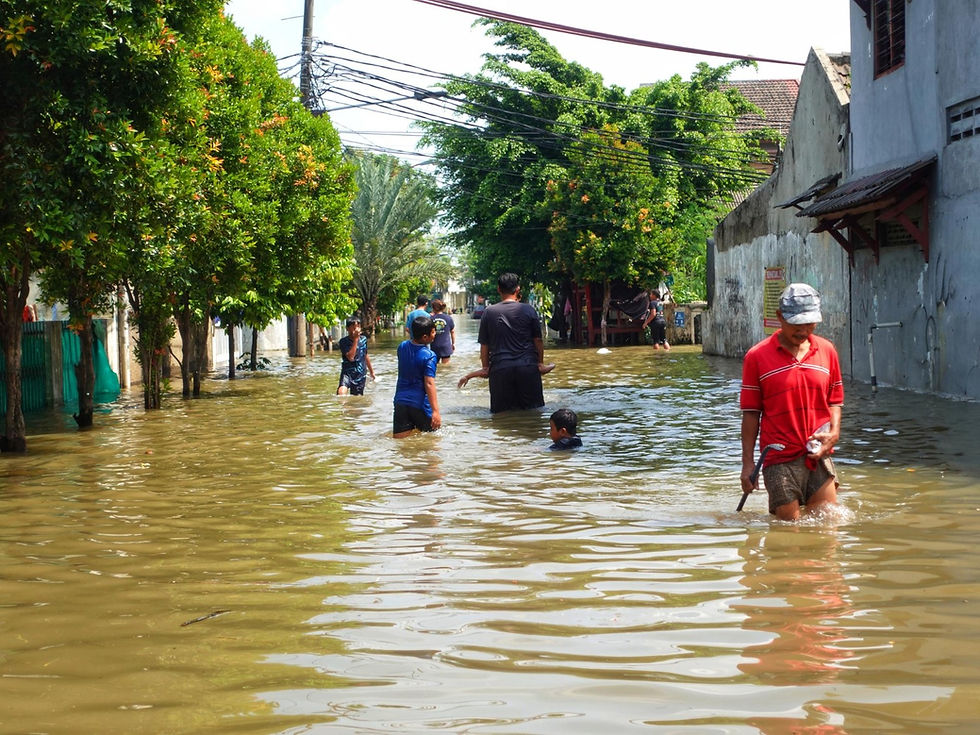
There was a time when floods, heatwaves, droughts, and storms were spoken of as isolated emergencies - events that arrived, disrupted life, and passed. Today, that understanding is no longer enough. Across India, disasters are becoming more frequent, more intense, and far less predictable. What we are witnessing on the ground is not merely a disaster management challenge; it is the unmistakable face of climate change unfolding in communities every single day.
As someone working closely with schools, local governments, volunteers, women’s groups, and frontline responders in the field of disaster preparedness, I have seen how climate change is no longer discussed as an environmental issue alone. It is now a livelihood issue, a health issue, a safety issue, and increasingly, a question of social equity.
In village interactions, women speak of summers that have become unbearable, forcing changes in daily routines, water use, and household labor. Farmers discuss rainfall that no longer follows familiar patterns. Urban communities narrate how a few hours of intense rain can now bring entire neighbourhoods to a standstill. Frontline responders share that emergencies are no longer seasonal - they are layered, recurring, and often simultaneous.
This shift is deeply significant.
For decades, disaster response systems in India were largely designed around the assumption that hazards were occasional. But climate change has altered the rhythm of risk itself.
Heatwaves are arriving earlier and staying longer. Flash floods are appearing in areas with weak drainage and dense construction. Water scarcity is intensifying even in regions that once considered themselves secure. Air quality deterioration, vector-borne diseases, and urban heat stress are compounding vulnerabilities, especially for children, the elderly, and low-income populations.
Communities are not facing one disaster at a time anymore. They are facing interconnected stresses.
And yet, one of the strongest lessons from the ground is this: resilience cannot be built only through post-disaster relief. It has to be built before the sirens.
This is where climate adaptation and disaster preparedness must stop functioning in silos.
When a school conducts an evacuation drill, it is not merely preparing for an earthquake or fire - it is cultivating a generation that understands risk, response, and collective action. When community volunteers are trained in early warning dissemination, first aid, and local resource mapping, they become the first climate responders long before institutional support reaches. When women’s self-help groups discuss water conservation, waste management, or household preparedness, they are contributing directly to local climate adaptation.
These may appear like small interventions, but on the ground, they become the architecture of survival.
In many of our workshops, one recurring realization emerges from participants: climate change feels overwhelming when discussed globally, but becomes actionable when understood locally. People may not connect immediately with terms like “mitigation pathways” or “adaptation finance,” but they instantly connect when asked:
Why is summer harsher than before?
Why are drains overflowing after one spell of rain?
Why is clean water becoming harder to secure?
Why are diseases changing with weather patterns?
This is where climate communication must change.
We do not need climate conversations only in conference halls. We need them in classrooms, panchayat meetings, mohalla committees, self-help groups, youth clubs, and training grounds for first responders. Climate literacy must move from abstract science to practical citizenship.
Another important truth from the field is that vulnerable communities are not merely victims of climate change; they are repositories of adaptation wisdom. Local coping mechanisms, community solidarity, indigenous water practices, decentralized warning systems, and volunteer-based support structures often provide the first line of resilience. The challenge is not that communities lack solutions - the challenge is that these solutions are rarely scaled, supported, or institutionally integrated.
If India is to build genuine climate resilience, we must stop seeing disaster management as a response department and begin seeing it as a climate governance imperative.
Preparedness training, resilient infrastructure, school safety, water conservation, local volunteer systems, risk-informed planning, and citizen awareness are no longer optional development extras. They are climate necessities.
The climate crisis is not waiting for policy language to catch up.
It is already visible in the exhausted faces during heatwaves, in flooded streets after short cloudbursts, in crop anxieties, in water queues, and in the growing uncertainty communities carry into every season.
The frontline reality is clear: disasters are no longer natural interruptions to normal life. They are becoming the new indicators of a changing climate.
And if resilience is to be real, it must begin where the impacts are felt first - within communities.



I was browsing around recently and bumped into this stats page. The interface initially felt a bit cluttered, but it is what it is. Basically, they track group tables for twenty five ICC tournament editions between 2006 and 2026. Every ball gets counted with net run rates included. If you want to dive in, https://cricketin.org/icc is just another option to look through. Incomplete editions are simply left out to avoid bad data. Overall, it is just another platform, so check everything yourself.