

Reflecting on Mexico’s NDC at COP30: Reinforcing the narrative of climate resilience and the importance of energy transition.
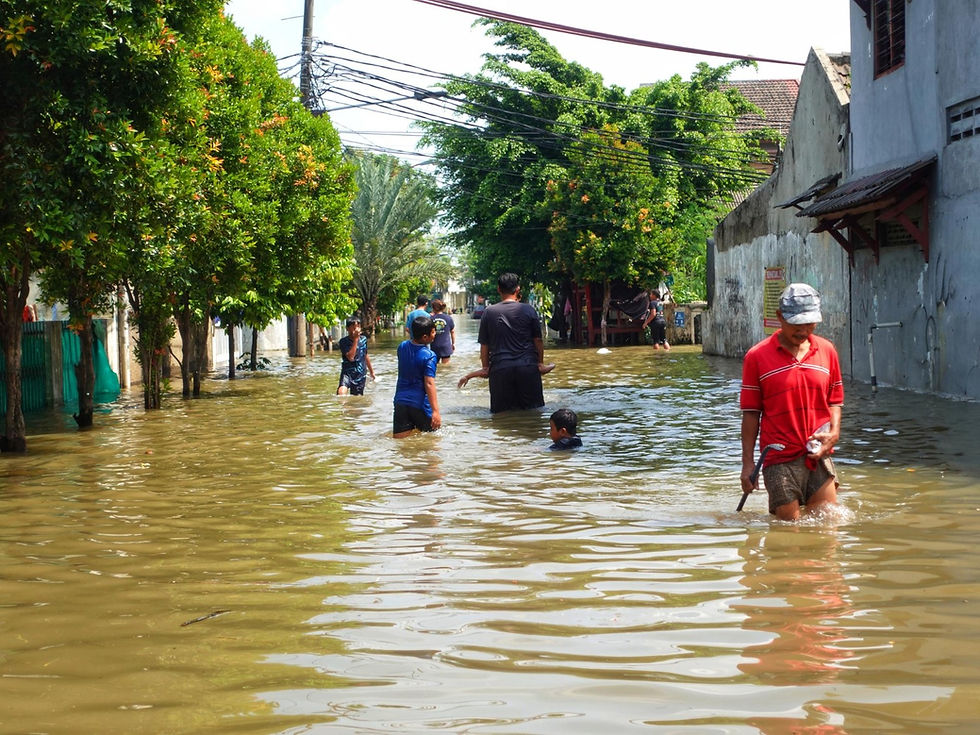
As climate change advances, we are going to experience more frequent and severe natural phenomenon that are mainly driven by human activity and in these times it becomes highly important that, according to the principle established by the UNFCC of “common but differentiated responsibilities”, the wealthier and heavy emitters countries must start showing real commitment and pay for the damages that are already affecting many vulnerable communities and people around the world, as well as contributing enough finance to create more resilience and adaptation. In my country, Mexico, we recently faced one of the greatest floods in the last decades that affected some central states, like Veracruz, Puebla and Hidalgo, resulting in hundreds of families that lost their homes and livelihoods, including some missed and dead people, most of them from low to medium income backgrounds, reflecting the harsh reality of climate change and revealing the truth about most of the global south countries: the governments still don’t have enough capability and resources to face these situations, being one of the greatest challenges nowadays to create more adaptation and resilience.

Collection center for victims of the 2025 floods in Mexico at Plaza de la Constitución, Mexico City. | Source: Creative Commons.
However, in Mexico, this catastrophe was prognosticated by the authorities of one of the last administrations just two years ago in 2023, in a report called “Atlas de Riesgos” (“Risk Atlas”), in the case of Veracruz, in which there existed a map showing the risk areas and it was stated that more than 126,000 citizens were exposed to a high risk of flooding and 22,000 with a very high risk. In another document called “Plan Municipal de Desarrollo Urbano 2019” (“Municipal Urban Development Plan 2019”) it was highlighted the importance of building a 4.3-kilometer retaining wall on the right bank of the Cazones river, with a budget of 129 million pesos, to mitigate the flooding and save the population from the devastating consequences. Despite the warnings, the government decided to prioritize and invest in other matters, but unfortunately now it is clear that they can no longer postpone it anymore.

Cazones River in Poza Rica, Veracruz. | Source: Creative Commons.
Recently at COP30, Mexico submitted its updated NDC 3.0, bringing more focus to these pressing areas. For the first time, Mexico included an explicit component that accounts for Loss and Damage, reflecting the recognition of the real and inevitable impacts of climate change, as well as reinforcing the adaptation efforts by working on a National Adaptation Policy to institutionalize these strategies. It also covers other areas such as climate justice for vulnerable communities and just transition, including finance mechanisms, technological transfer and strengthening of institutional capabilities. However, the implementation of this NDC will depend largely on getting international support to achieve these goals, as I mentioned in the beginning, so the role of international cooperation becomes crucial more than ever.

One of the oldest refineries in Mexico, the Fransico I. Madero refinery at Tamaulipas, Mexico. | Source: Creative Commons.
Finally, Mexico is still a heavy fossil fuel dependent country with more than half of its energy production coming from this source, so the mitigation component is one of the most important to work in order to reach to the goal of carbon zero which this year was projected to be achieved in 2050, committing to keep its carbon emissions between 365 and 404 Mt regardless of the international support, that means through national efforts. Meanwhile, the Mexican population needs to continue raising their voices against the climate injustice and claim for policies that really support the energy transition and solve the inequities due to climate change that are currently inevitable and will continue to appear in the following years.



Comments